
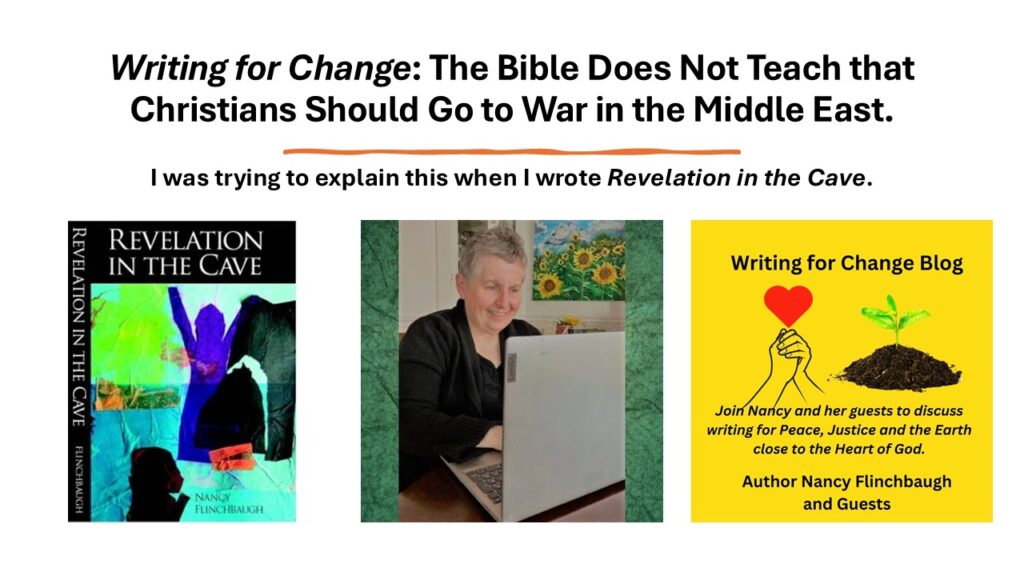
I wrote my first book, Revelation in a Cave, to expose a faulty theory popular among some Christians. The idea is wrapped up in the Rapture Theory and a concocted view of scripture that suggests that we should bring on war in the Middle East and the final battle of Armageddon. Yesterday, I read that US military commanders are telling this fiction to our troops to justify the Trump Administration’s attack on Iran. Over 200 troops have written complaints. Here is one of these complaints:
“This morning our commander opened up the combat readiness status briefing by urging us to not be “afraid” as to what is happening with our combat operations in Iran right now. He urged us to tell our troops that this was “all part of God’s divine plan” and he specifically referenced numerous citations out of the Book of Revelation referring to Armageddon and the imminent return of Jesus Christ. He said that “President Trump has been anointed by Jesus to light the signal fire in Iran to cause Armageddon and mark his return to Earth.”
— Military Religious Freedom Foundation active duty NCO client, writing on behalf of themself and 15 other unit members. Read more about this at: https://www.militaryreligiousfreedom.org/2026/03/mrff-inundated-with-complaints-of-gleeful-commanders-telling-troops-iran-war-is-part-of-gods-divine-plan-to-usher-in-the-return-of-jesus-christ/
Jesus’ teachings are quite clear. He taught us to love our neighbors as ourselves. He taught us to turn the other cheek. There is nothing in his teachings that suggests that violence is acceptable. He certainly did not tell us to bring on the end of the world by starting a war. The Book of Revelation does not promote war. It was a message to the early Christians to keep the faith. The only blood spilled was the blood of the lamb, a reference to the death of Jesus.
Here is some more detail about the Rapture Theory and End Times that I wrote in my Study Guide for Revelation in the Cave which you can find on my website.
Revelation in the Cave and the Rapture Theory
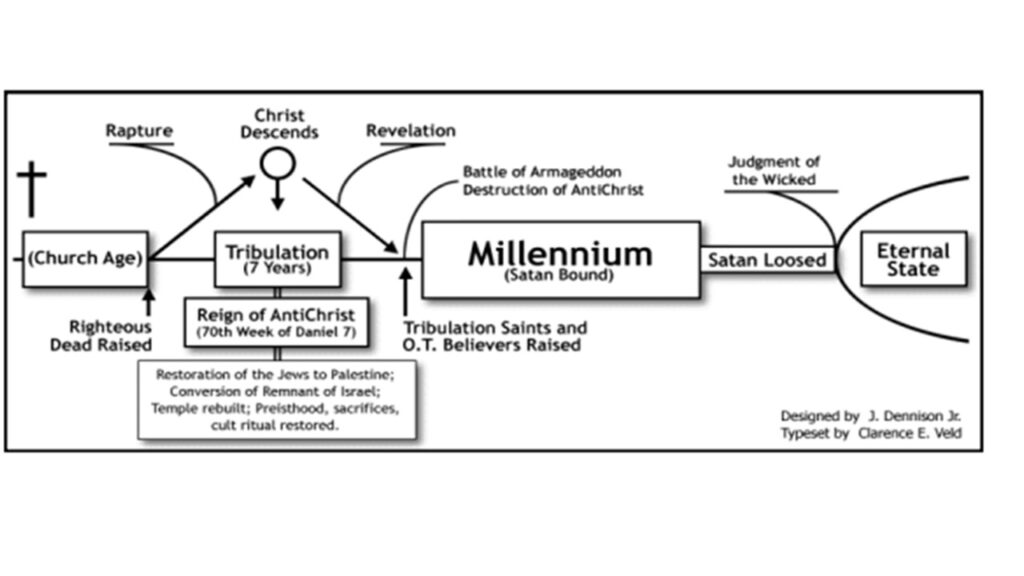
The Bible certainly makes reference to the end times, and these passages have been interpreted in many ways over time. One such interpretation, the Rapture Theory, holds that Jesus will physically lift all believers, living and dead, to heaven just before the great tribulation described in the book of Revelation. The Rapture Theory actually stemmed from a Scottish girl’s vision, which was then elaborated by a British cleric, John Nelson Darby, in 1830. He brought his theory to the United States and it was explained in the Schofield Chain Reference Bible, a bestseller in the early 1900s. Many Christians today believe this theory, but probably are not aware that it is a relatively new invention. The theory pieces together passages from very different parts of the Bible (Daniel 9:25-27, I Thessalonians 4:13-18, Matthew 24:39-42, Matthew 24-25, John 14:1-2 and the Book of Revelation’s apocalyptic passages).
This theory is considered “premillennialist” of which there are several versions, with the Rapture Theory also referred to as “Dispensationalist Premillennialism.” Millennialism refers to end-time beliefs about a 1,000 -year golden age on Earth. “Premillenialists” believe Jesus will return to Earth before the millennium; ‘Post-millennialists” believe he will return after it. “Amillennialists” believe the golden age is largely symbolic. Each of these theories has several variations. A graphic depiction of this theory is offered here:
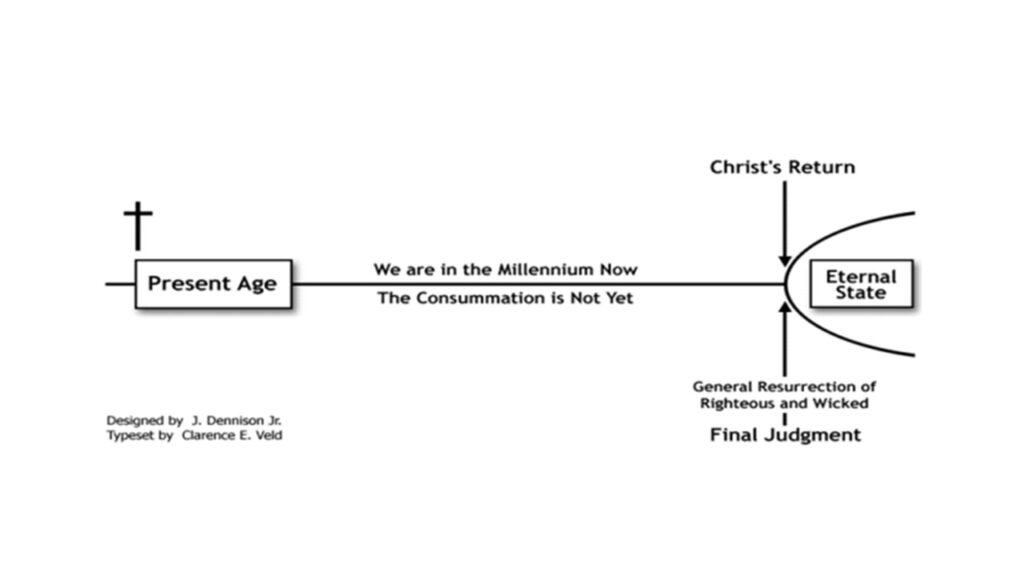
Another viewpoint would hold that such an interpretation reads too much into the scripture. They prefer a more general interpretation of the end times, such as this view, called amillennialism.
The idea of “The Rapture” — the return of Christ to rescue and deliver Christians off the earth — is an extremely popular interpretation of the Bible’s book of Revelation and a jumping -off point for the best-selling “Left Behind” series of books. This interpretation, based on a psychology of fear and destruction, guides the daily acts of thousands if not millions of people worldwide. In The Rapture Exposed, Barbara Rossing argues that this script for the world’s future is nothing more than a disingenuous distortion of the Bible. The truth, Rossing argues, is that Revelation offers a vision of God’s healing love for the world. Her concern is that this leads some Christians to applaud ecological disasters and escalation of tension in the Middle East as signs that Armageddon will soon arrive. Rossing asserts that, “The Bible does not provide a predictive screenplay for worldwide violence and disaster in the Middle East. Revelation’s gift to us is a story of a God who loves us and comes to live with us. Biblical prophets are not predictors of end-times events, they are inspired voices, calling people to repentance and justice. They tell the wonderful and crucial story of God’s faithfulness. They give us hope.” In Revelation in the Cave, each scroll adds some interpretation to the book of Revelation, similar to Rossing’s theory.
Excerpt from “Revelation in the Cave Study Guide” by Nancy Flinchbaugh. Available on her website at: http://www.spiritualseedlings.com/wp-content/uploads/2013/03/Final-Revelation-in-the-Cave-Study-Guide.pdf
Revelation in the Cave Bibliography
Barclay, William. The Revelation of John, Volume 1, Revised Edition. Philadelphia: Westminster Press, 1976.
Barr, David L., “The Dawn of a New Day: The Apocalypse of John,” in New Testament Story: An Introduction, 3rd ed. Wadsworth, 418-457.
Collins, Adel Yarbro, The Apocalypse. Wilmington, Delaware: Michael Glazier, Inc., 1979.
Crossan, John Dominic and Jonathan Reed. In Search of Paul. New York: HarperCollins Publishers, 2004
Ehrman, Bart. “Christians and the Cosmos: The Revelation of John, the Shepherd of Hermas and the Apocalypse of Peter,” in The New Testament: A Historical Introduction to the Early Christian Writings, 3rd edition. New York: Oxford University Press, 2004, 461-474.
Lost Christianities: Christian Scriptures and the Battles over Authentication: Chantilly, Virginia: The Teaching Company, 2002
Frant, Clyde E. and Mitchell G. Reddish. A Guide to Biblical Sites in Greece and Turkey. New York: Oxford University Press, 2003
Grimsrud, Ted. The Triumph of the Lamb. Scottsdale, Pennsylvania: Herald Press, 1987.
Guide to the Holy Monastery of St. John the Theologian Patmos. Patmos, Greece: Patriarchy
of Patmos, 2009
Hemer, Colin J. The Letters to the Seven Churches of Asia in Their Local Settings. Grand Rapids, Michigan: Eerdman Press, 2001
Johns, Loren L. The Lamb Christology of the Apocalypse of John. Hemsbach, Germany: Druckpartner Rubelmann GmbH, 2003
Keskin, Naci. Ephesus. Istanbul: Keskin Color, 2006
Rossing, Barbara R., The Rapture Exposed: The Message of Hope in the Book of Revelation. Boulder, Colorado: Westview Press, 2004.
Schussler Fiorenza, Elisabeth. The Book of Revelation: Justice and Judgment. Philadelphia:Fortress Press, 1985.
Sleeper, C. Freeman. The Victorious Christ. Louisville, KY: Westminster Press: 1996.
Thompson, Leonard L. The Book of Revelation: Apocalypse and Empire. New York: Oxford University Press, 1990